Odoo ERP Acceptance Criteria in UAE
Define Odoo ERP Acceptance Criteria to validate workflows, approvals, reporting, and go-live readiness for UAE manufacturing operations.
 RIbsadmin
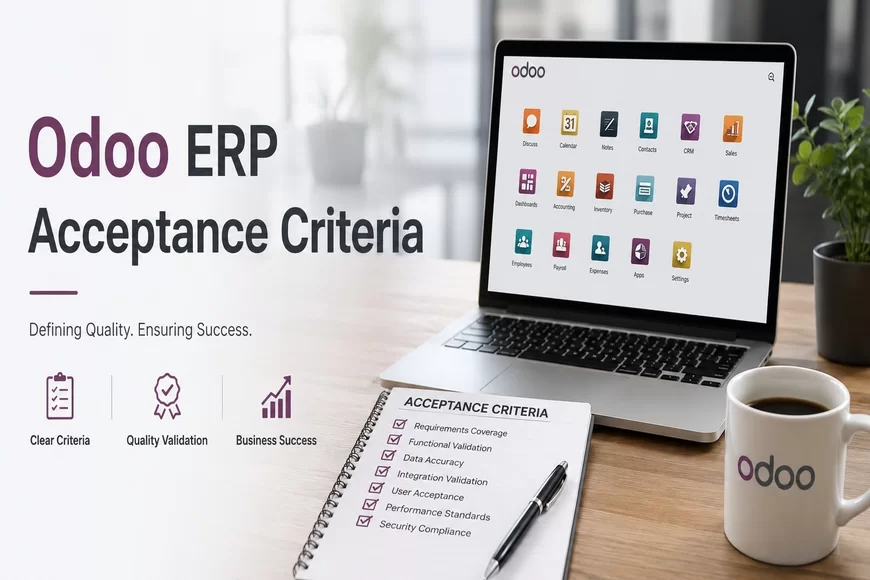
Odoo Manufacturing ERP Acceptance Criteria
Define success before go-live—so operational confidence is measurable, not assumed
ERP projects become risky when “done” is unclear. Without defined acceptance criteria, teams rely on assumptions, approvals become subjective, and unresolved gaps appear after go-live—when the cost of correction is higher. Odoo Manufacturing ERP acceptance criteria create a controlled validation framework so workflows, reporting, approvals, traceability, and operational outputs are tested against agreed expectations before production dependency begins.
For manufacturers in Dubai, Abu Dhabi, and Sharjah, this reduces uncertainty and improves adoption confidence.
What Acceptance Criteria Actually Protects
Clarity reduces resistance. Measurable validation reduces risk.
Acceptance criteria define how success will be evaluated across departments, workflows, reporting, and operational controls. Instead of relying on verbal confirmation, teams validate execution against structured checkpoints.
What leadership gains through controlled acceptance
- Clear go-live readiness: users know what must work before sign-off
- Measurable validation: workflows and reports tested against defined outcomes
- Reduced operational surprises: issues identified before live dependency increases
- Stronger user adoption: teams trust systems that behave predictably
- Audit-friendly governance: approvals and validation evidence remain traceable
Implementation structure: Odoo Apps Implementation Services
High-Intent CTA (UAE)
Reduce go-live anxiety through structured validation
- Request a consultation: align acceptance logic with operational priorities: Contact Us
- Book a manufacturing ERP walkthrough: validate workflows before deployment pressure increases: Book a Demo
Why Acceptance Criteria Matters in Manufacturing ERP
Because unclear expectations create hidden operational risk
Manufacturing operations depend on timing, traceability, approvals, and accurate execution. Acceptance criteria help ensure that production, inventory, quality, maintenance, procurement, and finance workflows perform consistently before teams rely on them daily.
What Effective Acceptance Criteria Includes
Validation must reflect real operational pressure—not ideal conditions
- Workflow validation: approvals, transactions, handovers, and exceptions tested end-to-end
- Reporting validation: KPI outputs aligned with management expectations
- Role-based testing: users validate permissions and execution responsibilities
- Data validation: migrated data reconciled against operational accuracy checks
- Exception testing: controlled handling of errors, delays, and approval escalations
- Go-live readiness checks: operational confidence confirmed before cutover approval
Manufacturing-Focused Validation Scenarios
The system should perform consistently during real operational conditions
- Production teams validate work order flow and shop-floor execution
- Warehouse teams confirm stock movements and barcode reliability
- Quality teams verify inspections, traceability, and evidence capture
- Finance teams validate valuation logic and reporting consistency
- Leadership validates KPI visibility, approval governance, and operational transparency
Implementation Approach (Controlled Sign-Off Structure)
Structured validation creates adoption confidence
RIBS uses phased acceptance validation to reduce confusion and strengthen operational readiness before dependency on the ERP increases.
- Define validation scope: workflows, reports, approvals, operational KPIs
- Prepare testing scenarios: real operational use cases and exception flows
- Conduct UAT cycles: users validate execution against agreed acceptance logic
- Document observations: issues tracked with ownership and resolution priorities
- Confirm go-live readiness: sign-off aligned to operational stability expectations
- Review post-go-live stability: reinforce adoption and process consistency
Consulting and governance support:
Odoo Software Consulting Services
Odoo Apps Workflow Automation Services
Why Controlled Acceptance Improves Adoption
People trust systems that behave consistently under pressure
When users clearly understand how success is measured, resistance decreases and accountability improves. Structured validation also reduces blame-driven confusion after go-live because expectations were already documented and tested.
Why RIBS Technologies
Because ERP stability starts before go-live—not after it
RIBS Technologies is an ISO 9001:2015-certified software development company delivering structured ERP programs focused on operational clarity, governance, and adoption confidence.
- Finance & accounting: invoicing discipline and reporting confidence with Odoo Finance Process Applications
- Sales operations: pipeline clarity and order consistency with Odoo Sales Applications
- Supply chain: procurement and inventory accuracy with Odoo Supply Chain Applications
- HR & governance: standardised workflows and approvals with Odoo Human Resources Applications
- Services & delivery: accountability for projects and services using Odoo Services Applications
- Productivity & approvals: enforce ownership with Odoo Productivity Applications
CTA Block - Odoo Manufacturing ERP Acceptance Criteria
Go-live confidence comes from controlled validation—not assumptions
- Book a demo: Request Demo
- We are the certified: Odoo ERP Partner
- To know more: About RIBS
- Customers who got benified by us: Clients
FAQs - Odoo Manufacturing ERP Acceptance Criteria
Q1: What is ERP acceptance criteria in manufacturing implementation?
A: Acceptance criteria define how workflows, reporting, approvals, and operational controls will be validated before go-live. This creates measurable readiness instead of assumption-based approvals.
Q2: Why is acceptance criteria important before ERP go-live?
A: It helps identify gaps early, reduces operational surprises, and improves user confidence by validating processes under realistic business scenarios.
Q3: Who should participate in ERP acceptance testing?
A: Production, warehouse, quality, finance, procurement, and leadership teams should validate workflows related to their operational responsibilities.
Q4: Does acceptance criteria include reporting validation?
A: Yes. KPI dashboards, operational reports, approvals, and valuation outputs are commonly reviewed during acceptance testing.
Q5: Can acceptance criteria reduce post-go-live issues?
A: Structured validation helps reduce unresolved workflow gaps before dependency on the ERP system increases.