Odoo Manufacturing ERP in Multi-Plant Control
Manage multiple factories with Odoo Multi-Site Manufacturing ERP. Gain unified production, inventory visibility and operational control across plants.
 RIbsadmin
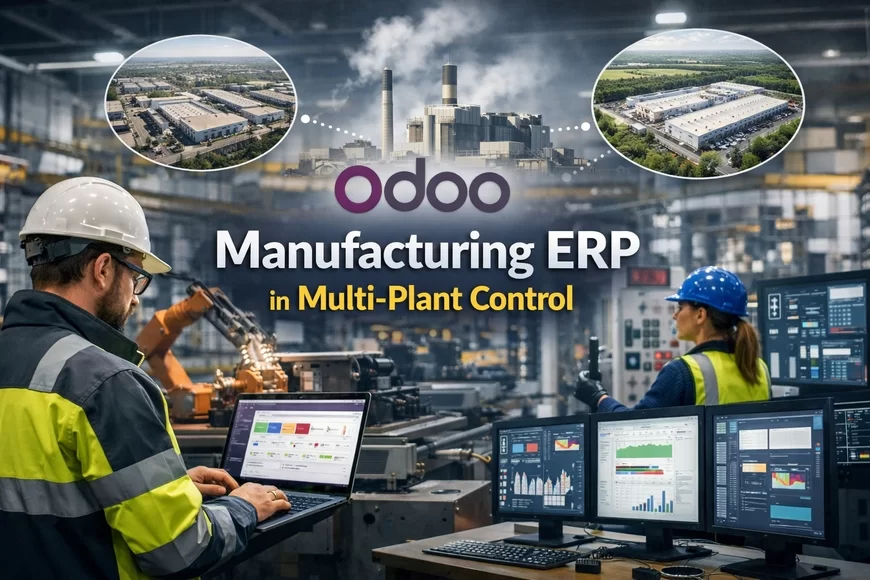
Odoo Multi-Site Manufacturing ERP
One system. Multiple plants. Unified operational control.
As manufacturers grow, complexity rarely comes from production itself.
It comes from running multiple plants, warehouses, and teams that must behave as one organization.
Different locations begin using slightly different processes. Data definitions drift. Inventory visibility weakens. Leadership spends more time reconciling information than improving performance.
Odoo Multi-Site Manufacturing ERP restores operational clarity by connecting every plant, warehouse, and production line into a single controlled system—while still allowing each facility to operate according to its reality.
The goal is not centralization for its own sake.
The goal is consistent execution with local flexibility.
When multi-site operations are structured correctly, something powerful happens:
decision-makers stop chasing data and start shaping outcomes.
Why Multi-Site Manufacturing Becomes Difficult
Growth introduces subtle operational friction.
- Each plant develops its own operational habits
- Inventory moves between locations with limited visibility
- Production planning becomes fragmented
- Quality standards vary slightly across facilities
- Financial consolidation takes longer than expected
None of these issues appear dramatic individually.
Together they quietly reduce operational confidence.
Teams begin asking the same question repeatedly:
“Which data should we trust?”
A unified ERP removes that doubt.
What Odoo Multi-Site Manufacturing Actually Solves
Odoo allows organizations to manage multiple factories, warehouses, and subsidiaries inside a single operational architecture.
Instead of separate systems or disconnected processes, every site operates with shared operational logic.
Key capabilities include:
- Multi-plant production planning
Central teams can see workloads, capacity and bottlenecks across facilities. - Inter-warehouse inventory visibility
Materials and finished goods can move between locations with full traceability. - Standardized workflows
Core manufacturing, quality and approval processes stay consistent. - Location-specific operations
Each plant can still manage its own routings, work centers and schedules. - Centralized reporting
Leadership receives one version of production, inventory and cost performance.
This balance is essential:
control for leadership, flexibility for operations.
Operational Benefits for Growing Manufacturers
Multi-site ERP adoption typically creates improvements in areas leadership cares about most.
1. Shared Operational Truth
Executives and plant managers operate from the same production and inventory data.
This eliminates delays caused by manual consolidation.
2. Faster Inter-Plant Coordination
When plants collaborate—such as subcontracting or balancing capacity—data already exists inside the system.
No spreadsheets required.
3. Consistent Quality and Compliance
Standard workflows ensure inspections, approvals and documentation behave the same way across facilities.
Consistency protects both reputation and audits.
4. Inventory Accuracy Across Locations
Stock transfers, reservations and replenishment rules become transparent.
Teams spend less time searching and more time producing.
5. Scalable Growth Structure
When organizations open a new plant, the system framework already exists.
Expansion becomes operationally predictable.
Designed for Multi-Plant Manufacturing Environments
Odoo multi-site structures are commonly used in:
- Manufacturing groups operating multiple factories
- Companies managing regional production plants
- Organizations with central warehouses supplying multiple facilities
- Businesses expanding through acquisitions or new production units
- Manufacturers requiring shared quality and governance standards
In each scenario, the goal remains consistent:
allow plants to move fast without losing organizational control.
Governance Without Operational Friction
A common fear with centralized systems is that they slow down plant operations.
That risk usually comes from poor implementation design.
A structured approach balances governance and speed:
- Core manufacturing rules are standardized
- Local operational realities remain configurable
- Data ownership and responsibility are clearly defined
- Reporting structures align with leadership decision needs
When this balance is correct, something changes culturally.
Instead of resisting the system, teams begin trusting it.
And trust reduces operational friction more than any feature.
Implementation Philosophy for Multi-Site ERP
Multi-plant ERP deployment requires careful sequencing.
A typical structure includes:
1. Operational Discovery
Understand how each plant actually works.
2. Core Process Design
Define shared manufacturing, inventory and quality standards.
3. Site Configuration
Adapt workflows for each facility without breaking governance.
4. Data Alignment
Standardize product structures, inventory definitions and reporting logic.
5. Phased Rollout
Start with a primary plant before expanding to others.
6. Stabilization
Ensure teams trust the system before scaling operations further.
The objective is stability first—then scale.
Psychological Advantage of Unified Operations
Beyond operational efficiency, multi-site ERP creates a subtle but powerful leadership advantage.
When data, workflows and approvals behave predictably:
- Teams make decisions faster
- Managers stop second-guessing reports
- Cross-plant collaboration becomes natural
- Leadership focuses on strategy rather than reconciliation
The organization begins operating with clarity instead of uncertainty.
And clarity is one of the most valuable assets in manufacturing.
CTA – Multi-Plant Manufacturers
If your organization runs multiple factories, warehouses or production units, the real challenge is not technology.
It is maintaining control while continuing to grow.
A structured multi-site ERP framework allows both.
You may consider:
- Book a demo: Contact
- Reviewing operational differences across plants
- Identifying inventory visibility gaps
- Evaluating cross-plant production coordination
- Designing a unified manufacturing control structure
Discussing these questions early often prevents costly system redesign later.
FAQs - Multi-Plant Manufacturers
Q1: What is multi-site manufacturing in Odoo?
It allows multiple factories, warehouses and business units to operate inside one ERP environment.
Q2: Can each plant use different workflows?
Yes. Shared standards can exist while individual plants maintain operational flexibility.
Q3: Does Odoo support inventory transfers between plants?
Yes. Inter-warehouse transfers include traceability and stock visibility.
Q4: Is reporting centralized for leadership?
Yes. Production, inventory and cost performance can be viewed across all facilities.
Q5: Is multi-site ERP suitable for expanding manufacturers?
Yes. It supports growth without losing operational governance.