Odoo vs Dynamics Manufacturing | ERP Comparison UAE
Compare Odoo vs Dynamics Manufacturing for production, inventory, quality, scalability, adoption, and ERP investment decisions in the UAE.
 RIbsadmin
Odoo vs Dynamics 365 Manufacturing
The right ERP is not the one with the most features—it is the one your factory consistently uses
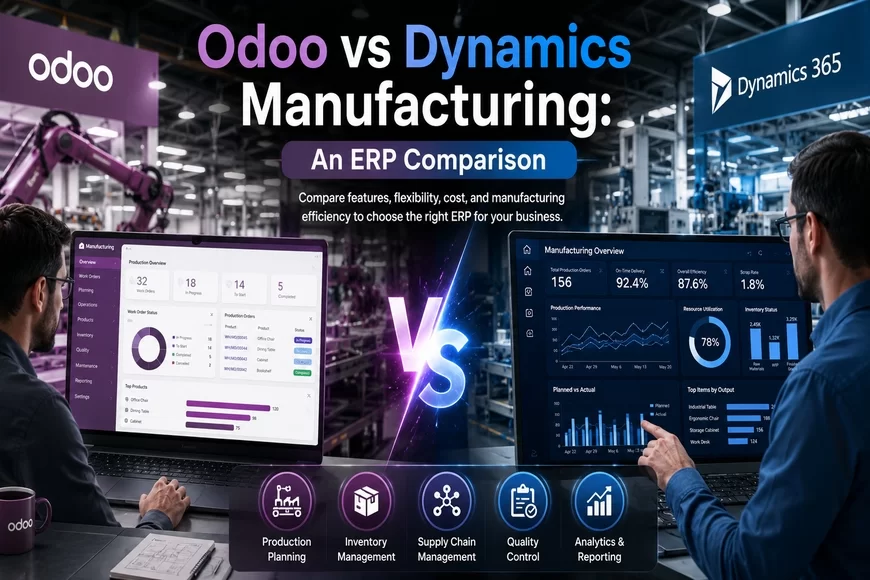
Manufacturers evaluating ERP systems often compare Odoo Manufacturing ERP and Microsoft Dynamics 365 Manufacturing. Both can support production, inventory, procurement, finance, and reporting. The real question is not which platform is bigger—it is which platform delivers the level of control, flexibility, adoption, and investment efficiency your operation requires.
For manufacturers in Dubai, Abu Dhabi, and Sharjah, ERP selection should focus on one outcome: creating operational certainty without introducing unnecessary complexity.
Understanding the Difference
Two strong platforms, two different implementation philosophies
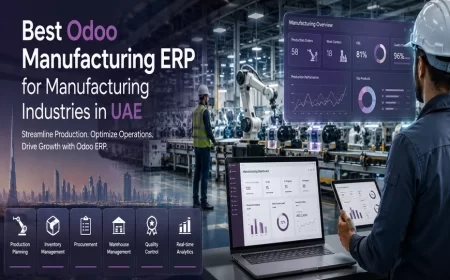
Odoo Manufacturing ERP is often selected by organizations seeking flexibility, unified operations, faster adoption, and controlled implementation costs.
Dynamics 365 Manufacturing is frequently considered by organizations already invested in the Microsoft ecosystem and requiring broader enterprise-level governance structures.
The right choice depends on production complexity, reporting expectations, growth plans, and internal resources available for ERP ownership.
Odoo Manufacturing ERP vs Dynamics 365 Manufacturing
Platform Simplicity
- Odoo: Unified application ecosystem with consistent user experience.
- Dynamics 365: Enterprise-grade environment with broader ecosystem dependencies.
Flexibility
- Odoo: Adaptable workflows and modular expansion.
- Dynamics 365: Strong process controls but may require more structured implementation approaches.
Investment Approach
- Odoo: Often preferred by organizations seeking lower entry barriers and phased expansion.
- Dynamics 365: Commonly selected for larger enterprise transformation programs.
Deployment Agility
- Odoo: Supports phased rollouts and operationally focused implementations.
- Dynamics 365: Often involves broader planning, governance, and stakeholder alignment.
User Adoption
- Odoo: Frequently recognized for ease of navigation and simplified user experience.
- Dynamics 365: Offers extensive functionality but may require additional training depending on scope.
Manufacturing Capabilities Comparison
Both platforms can support:
- Production planning and scheduling
- Bills of Materials (BOM)
- Work orders and shop-floor execution
- Inventory and warehouse management
- Procurement and supplier management
- Quality management processes
- Maintenance management
- Financial reporting and analytics
The evaluation should focus less on feature checklists and more on how efficiently your teams can execute daily operations using the platform.
When Odoo Manufacturing ERP May Be a Strong Fit
Organizations often evaluate Odoo when they want:
- Faster visibility across departments
- Reduced spreadsheet dependency
- Flexible process design
- Unified operations on a single platform
- Phased ERP adoption with controlled risk
- Scalable growth without excessive system complexity
The psychological advantage many manufacturers seek is simple: confidence that teams will actually use the system every day.
Typical Manufacturing Scenarios
Discrete Manufacturing
- BOM-driven production
- Work orders and routing control
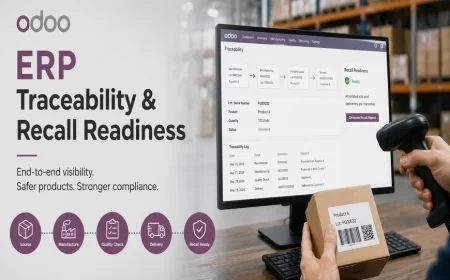
- Serial and lot traceability
Batch Manufacturing
- Quality checkpoints
- Yield monitoring
- Inventory traceability
Multi-Site Manufacturing
- Centralized reporting
- Role-based governance
- Standardized operational visibility
Implementation Matters More Than Software
Even the best ERP platform fails when adoption is weak.
Successful manufacturing ERP programs typically require:
- Discovery and process mapping
- Fit-gap analysis
- Data preparation
- Role-based training
- Controlled go-live planning
- Post-launch optimization
Implementation services:
- Odoo Consulting
- Odoo Manufacturing Implementation
- Odoo Integration Services
- Odoo Support & Maintenance
Why RIBS Technologies
ERP decisions influence operational performance for years. RIBS Technologies helps manufacturers evaluate ERP options using operational realities rather than marketing claims.
Core Odoo Manufacturing Services
Choose the service layer that strengthens operational control first
- Odoo Consulting: Define workflows, controls, KPIs, and rollout priorities: Odoo Software Consulting Services
- Odoo Implementation: Configure modules, roles, approvals, and reporting structure: Odoo Apps Implementation Services
- Odoo Customization: Extend features without destabilising the system: Odoo Application Customization Services
- Odoo Integration: Connect data flows across business systems: Odoo Application Integration Services
- Workflow Automation: Reduce delays with controlled automation: Odoo Apps Workflow Automation Services
- Analytics and Reporting: Build KPI reporting that drives action: Odoo Apps Analytics and Reporting Services
- Support and Maintenance: Protect uptime, ad option, and controlled improvements: Odoo Apps Support and Maintenance Services
CTA - Odoo vs Dynamics 365 Manufacturing
ERP selection should reduce uncertainty—not create it
- Book a demo: Contact RIBS Technologies
- We are the certified: Odoo ERP Partner
- To know more: About RIBS
- Customers who got benefits from us: Clients
FAQs - Odoo vs Dynamics 365 Manufacturing
Q1: Is Odoo Manufacturing ERP cheaper than Dynamics 365 Manufacturing?
A: Costs vary by scope, users, customization, integrations, and support requirements. A structured assessment provides the most accurate comparison.
Q2: Can Odoo support manufacturing operations like Dynamics 365?
A: Odoo supports production, inventory, procurement, quality, maintenance, and finance within a unified ERP environment.
Q3: Which ERP is easier for users to adopt?
A: Adoption depends on implementation quality, training, process design, and organizational readiness rather than software alone.
Q4: Is Odoo suitable for growing manufacturers?
A: Yes. Many organizations evaluate Odoo because it supports phased growth and modular expansion.
Q5: How should manufacturers compare ERP platforms?
A: Focus on operational fit, governance requirements, usability, scalability, implementation effort, and long-term ownership costs.