Odoo Manufacturing ERP Case Studies UAE
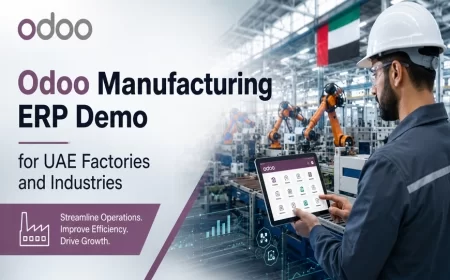
Explore Odoo Manufacturing ERP Case Studies and see how manufacturers improve production visibility, quality control, inventory accuracy, and reporting.
 RIbsadmin
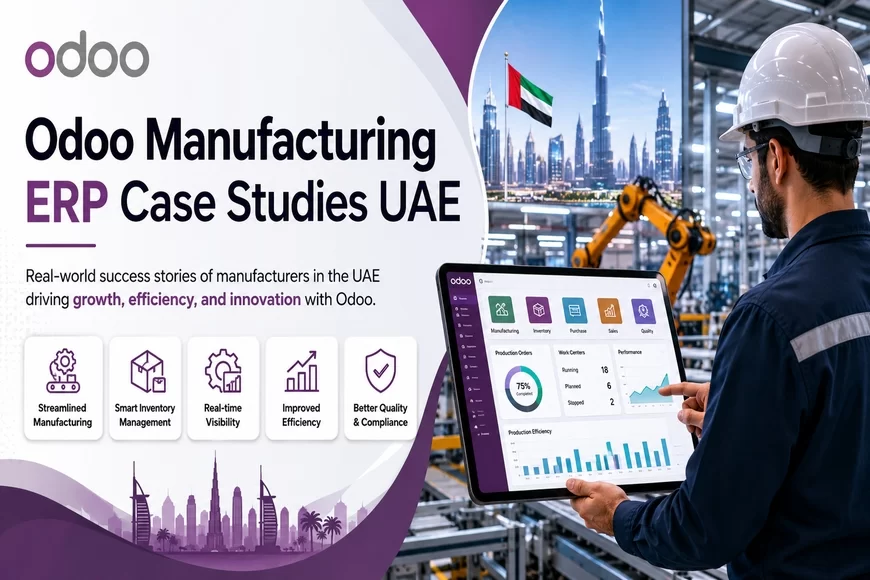
Odoo Manufacturing ERP Case Studies
See how structured execution creates measurable operational improvement
ERP decisions are rarely made because of features alone. Manufacturers want evidence that a system can support production under real-world pressure—tight delivery schedules, quality requirements, inventory challenges, and cost control expectations. These case studies highlight how manufacturers use Odoo Manufacturing ERP to improve visibility, strengthen governance, and create more predictable operations.
For businesses in Dubai, Abu Dhabi, and Sharjah, the goal is not simply implementing software—it is building a system that teams trust and use consistently.
Why Manufacturing Case Studies Matter
Confidence grows when results become visible
Every manufacturer has different workflows, constraints, and priorities. Case studies help decision-makers understand how ERP projects are approached, where risks are managed, and what types of improvements organizations commonly pursue.
What decision-makers look for
- Operational visibility: better control over production, inventory, quality, and maintenance.
- KPI improvement: stronger reporting and faster decision cycles.
- Governance discipline: clearer approvals, accountability, and process consistency.
- Adoption readiness: systems designed around daily execution, not just configuration.
Explore the platform foundation:
Odoo Manufacturing ERP Solutions
High-Intent CTA (UAE)
Understand what success could look like before you invest
- Request a manufacturing-focused demo: Book a Demo
- Discuss a similar use case: align requirements, KPIs, and rollout priorities.
Common Improvement Areas Highlighted in Case Studies
Small operational gains often create significant business impact
Manufacturers typically focus on:
- Production visibility: improved work order tracking and planning discipline.
- Inventory accuracy: stronger stock control and traceability.
- Quality consistency: standardized inspections and issue management.
- Maintenance governance: reduced dependency on reactive maintenance.
- Cost transparency: improved consumption tracking and variance visibility.
These improvements help leadership move from assumptions to evidence-based decisions.
Typical Manufacturing Scenarios
Examples of business challenges addressed through Odoo
- Production planning with limited visibility across departments.
- Inventory discrepancies affecting delivery commitments.
- Manual approval processes slowing execution.
- Quality records stored across multiple systems.
- Maintenance activities managed without centralized tracking.
- Multi-site reporting requiring consolidated visibility.
Related capabilities:
Odoo Supply Chain Management Software
Odoo Finance Accounting Solutions
What Organizations Commonly Measure
Success is usually evaluated through operational KPIs such as:
- Schedule adherence improvements.
- Inventory accuracy gains.
- Reduced rework and quality exceptions.
- Faster approval turnaround times.
- Improved reporting availability.
- Better visibility into production costs.
Actual outcomes vary depending on business size, process maturity, adoption levels, and project scope.
Implementation Lessons from Successful Projects
Preparation often determines long-term success
Common success factors include:
- Clear discovery and process mapping.
- Defined ownership and governance.
- Structured user training.
- Controlled data migration.
- Phased deployment where appropriate.
- Ongoing optimization after go-live.
Implementation support:
Odoo Apps Implementation Services
Why RIBS Technologies
Because ERP value depends on adoption, not installation
RIBS Technologies focuses on aligning ERP platforms with operational reality. The objective is to create systems that support daily execution, reporting clarity, and sustainable process discipline.
Core Odoo Manufacturing Services
Choose the service layer that strengthens operational control first
- Odoo Consulting: Define workflows, controls, KPIs, and rollout priorities: Odoo Software Consulting Services
- Odoo Implementation: Configure modules, roles, approvals, and reporting structure: Odoo Apps Implementation Services
- Odoo Customization: Extend features without destabilizing the system: Odoo Application Customization Services
- Odoo Integration: Connect data flows across business systems: Odoo Application Integration Services
- Workflow Automation: Reduce delays with controlled automation: Odoo Apps Workflow Automation Services
- Analytics and Reporting: Build KPI reporting that drives action: Odoo Apps Analytics and Reporting Services
- Support and Maintenance: Protect uptime, ad option, and controlled improvements: Odoo Apps Support and Maintenance Services
Learn more:
About RIBS Technologies
Clients
CTA Block - Odoo Manufacturing ERP Case Studies
The fastest way to reduce ERP uncertainty is to evaluate real-world scenarios
- Book a consultation: Contact RIBS Technologies
- We are the certified: Odoo ERP Partner
- To know more: About RIBS
- Customers who got benefits from us: Clients
FAQs - Odoo Manufacturing ERP Case Studies
Q1: Why review manufacturing ERP case studies before selecting a solution?
A: Case studies help organizations understand implementation approaches, governance models, and the types of operational improvements businesses commonly target.
Q2: Do case studies guarantee similar results for every manufacturer?
A: No. Results vary based on processes, data quality, adoption levels, operational complexity, and project scope.
Q3: What manufacturing sectors typically use Odoo ERP?
A: Odoo is commonly used across food processing, chemicals, plastics, metal fabrication, machinery, packaging, and other industrial sectors.
Q4: What KPIs are often tracked after implementation?
A: Manufacturers frequently monitor inventory accuracy, production performance, quality metrics, downtime, approval cycle times, and cost visibility.
Q5: Can RIBS discuss similar manufacturing scenarios during a demo?
A: Yes. Discovery discussions can be aligned to your production model, reporting priorities, and operational objectives.