How a Retail Brand Unified POS, Inventory & Online Sales Using Odoo
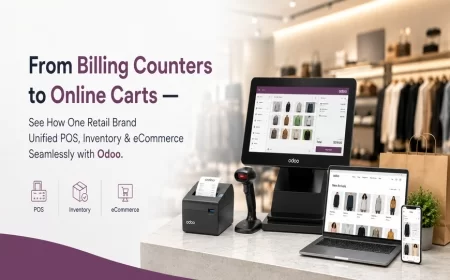
See how Odoo Retail ERP unified POS, inventory, online sales, and reporting to improve retail visibility, stock accuracy, and operational control.
 RIbsadmin
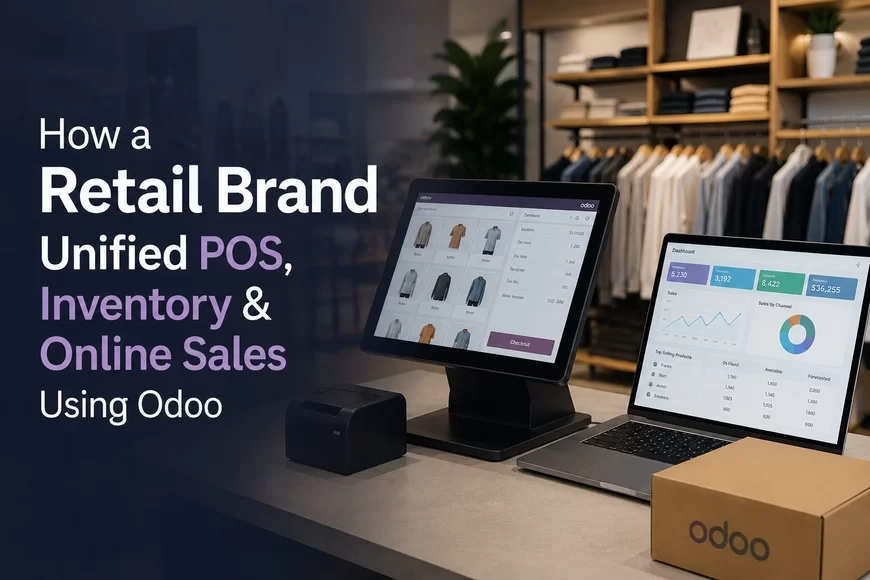
How a Retail Brand Unified POS, Inventory & Online Sales Using Odoo
Retail Case Study – One Connected Commerce Platform
When every sales channel shares the same data, every business decision becomes stronger
A growing retail business was expanding across physical stores and online channels, but daily operations were becoming increasingly difficult to manage. Store teams, warehouse staff, and management worked with different systems, resulting in inconsistent stock levels, delayed updates, manual reconciliations, and limited visibility into overall business performance.
The objective was clear: create one connected retail platform that synchronized Point of Sale (POS), inventory, eCommerce, purchasing, accounting, and reporting—without adding operational complexity.
Business Challenges
Before implementation, the retailer experienced several operational gaps:
- Inventory mismatches between stores and warehouse
- Online orders delayed because stock was inaccurate
- Manual synchronization between POS and accounting
- Slow replenishment decisions due to outdated reports
- Limited visibility into product profitability and sales trends
Instead of reacting to problems every day, the business wanted a system that could prevent problems before they affected customers.
The Odoo Solution
A unified Odoo ERP platform was implemented to connect core retail operations into one workflow.
Key solution areas included:
- Odoo POS connected directly with inventory
- Real-time inventory updates across stores and warehouse
- Online sales integrated with centralized stock
- Automated purchasing based on replenishment rules
- Finance synchronized with daily retail transactions
- Live dashboards for sales, inventory, and profitability
Every transaction updated business data automatically, helping reduce manual work while improving operational confidence.
Business Outcomes
After adopting a connected retail platform, the organization established stronger operational control.
Typical improvements included:
- Better inventory visibility across all sales channels
- Faster replenishment planning
- Reduced manual reconciliation effort
- Improved order fulfillment accuracy
- More reliable management reporting
- Better customer buying experience through stock consistency
The greatest improvement was not simply automation—it was decision confidence. Leadership could rely on one version of operational truth instead of comparing multiple reports.
Why Unified Commerce Matters
Retail growth becomes difficult when stores, warehouses, finance, and online sales operate independently. A connected ERP creates predictable execution by ensuring every department works from the same information.
Instead of asking:
"Which report is correct?"
Management can focus on:
"What decision should we make next?"
Why RIBS Technologies
Successful retail ERP projects depend on process design as much as software.
RIBS Technologies delivers structured Odoo implementations focused on:
Core Odoo Manufacturing Services
Choose the service layer that strengthens operational control first
- Odoo Consulting: Define workflows, controls, KPIs, and rollout priorities: Odoo Software Consulting Services
- Odoo Implementation: Configure modules, roles, approvals, and reporting structure: Odoo Apps Implementation Services
- Odoo Customization: Extend features without destabilising the system: Odoo Application Customization Services
- Odoo Integration: Connect data flows across business systems: Odoo Application Integration Services
- Workflow Automation: Reduce delays with controlled automation: Odoo Apps Workflow Automation Services
- Analytics and Reporting: Build KPI reporting that drives action: Odoo Apps Analytics and Reporting Services
- Support and Maintenance: Protect uptime, ad option, and controlled improvements: Odoo Apps Support and Maintenance Services
CTA
If your retail business still depends on disconnected POS, spreadsheets, and separate inventory systems, now is the right time to build one connected operating platform.
- Book a demo: Contact RIBS Technologies
- We are the certified: Odoo ERP Partner
- To know more: About RIBS
- Customers who got benefits from us: Clients
FAQs
Q1. Can Odoo connect POS and online sales?
A: Yes. Odoo can synchronize POS, eCommerce, inventory, and accounting within one ERP platform, reducing duplicate work and improving operational visibility.
Q2. Is Odoo suitable for multi-store retail businesses?
A: Yes. Odoo supports centralized inventory, pricing, purchasing, and reporting across multiple retail locations.
Q3. Does Odoo provide real-time inventory updates?
A: Inventory movements are updated across connected operations, helping improve stock accuracy and replenishment planning.
Q4. Can Odoo automate retail purchasing?
A: Yes. Replenishment rules can assist purchasing decisions based on inventory requirements and demand.
Q5. What determines the implementation timeline?
A: Project duration depends on the number of stores, business processes, integrations, data migration, and customization requirements.