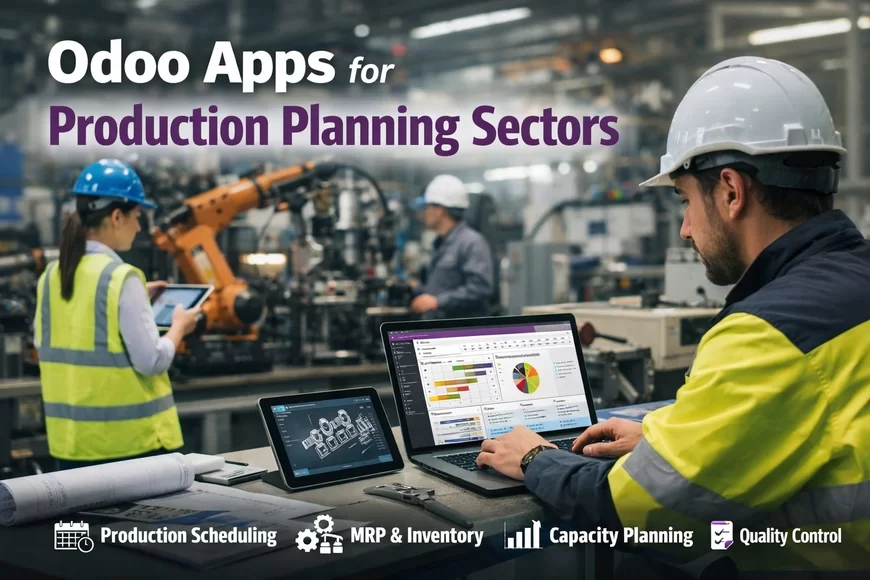
Odoo Apps for Production Planning Sectors
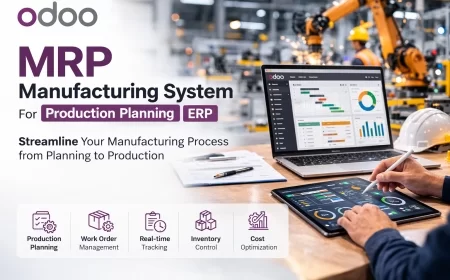
Improve factory efficiency with Odoo Production Planning. Align demand, materials and capacity to schedule production with clarity and control.
 RIbsadmin
Odoo Production Planning for Manufacturing
Turn uncertainty into controlled production flow
Production planning is where most factories either gain control—or lose it quietly. When plans live in spreadsheets, priorities change without discipline. Machines wait for materials, supervisors chase updates, and delivery promises become fragile.
Odoo Production Planning creates a structured planning environment where demand, capacity, materials, and production orders align in one operational system. Instead of reacting to daily surprises, manufacturers begin operating with predictable flow and visible priorities.
The psychological shift is powerful: teams stop guessing and start executing with clarity.
Why Production Planning Matters
Manufacturing performance rarely fails because people lack effort. It fails when decisions arrive too late.
Production planning inside Odoo ensures that every order, resource, and schedule follows a coordinated plan.
Key operational advantages include:
• Demand-driven planning: align manufacturing orders with confirmed sales demand
• Material readiness visibility: ensure raw materials exist before production starts
• Capacity awareness: avoid overload on machines or work centers
• Priority discipline: teams know what must be produced next
• Delivery confidence: production aligns with promised timelines
When planning becomes structured, the entire factory moves with less friction.
Core Capabilities of Odoo Production Planning
Odoo combines manufacturing planning tools inside a single environment. This prevents the common problem of fragmented systems where planning, inventory, and production data live in different platforms.
Key capabilities include:
1. Master Production Schedule (MPS)
Plan production quantities based on forecasted demand and inventory levels. MPS helps maintain balanced stock while preventing overproduction.
2. Manufacturing Orders (MO)
Generate production orders directly from demand signals. Each MO tracks materials, operations, and completion progress.
3. Bill of Materials Integration
Production planning automatically references the correct BOM structure, ensuring materials and components are aligned before scheduling begins.
4. Work Center Scheduling
Allocate operations to specific machines or workstations. Capacity planning reduces idle time and production bottlenecks.
5. Real-Time Planning Visibility
Managers gain dashboards showing upcoming orders, delays, material shortages, and work center loads.
Instead of reacting to chaos, leadership sees operational truth before problems escalate.
How Production Planning Improves Daily Factory Execution
Production planning is not just a strategic tool—it directly improves shop-floor execution.
Factories using structured planning typically experience:
• fewer urgent schedule changes
• reduced machine downtime caused by missing materials
• clearer shift-level priorities for operators
• improved coordination between production and procurement
• stronger on-time delivery performance
Most importantly, teams experience less operational stress. The system already defines the next step.
Integrated With the Manufacturing Ecosystem
Production planning performs best when connected to other operational systems. Odoo integrates planning directly with core manufacturing modules.
Examples include:
• Inventory Management: raw material availability and automatic reservations
• Procurement: automatic purchase triggers for material shortages
• Quality Management: checkpoints linked to production operations
• Maintenance: machine availability considered during scheduling
• Sales: customer demand drives production requirements
This integration ensures that planning decisions reflect the real operational situation, not assumptions.
Planning Discipline That Scales With Growth
Many factories begin with simple planning methods but struggle as production volume grows. More products, more orders, and more machines increase complexity.
Odoo Production Planning scales with the operation by enabling:
• multi-product planning environments
• multiple production lines or factories
• batch and discrete manufacturing models
• flexible scheduling adjustments
• management-level performance reporting
As complexity grows, the system absorbs the pressure instead of the team.
Implementation Focus for Production Planning
Successful production planning depends on structured configuration rather than simply activating software.
Key implementation steps typically include:
• defining accurate Bills of Materials
• configuring work centers and production routes
• aligning procurement lead times
• establishing planning rules and buffers
• training planners and supervisors on workflow discipline
When these foundations are correct, planning becomes predictable and trusted across departments.
CTA – Strengthen Your Production Planning
Factories rarely fail because they lack machines or people. They fail when production decisions happen without structure.
With Odoo Production Planning, manufacturers gain a reliable operational rhythm—where demand, materials, and production move together.
• Request a production planning demonstration
• Evaluate current scheduling gaps
• Design a planning structure aligned with real factory workflows
- Book a Demo session: Contact Us
Core Odoo Service Lines
Choose the service layer that removes the most risk first
- Odoo Consulting: Define workflows, controls, KPIs, and rollout priorities: Odoo Software Consulting Services
- Odoo Implementation: Configure modules, roles, approvals, and reporting structure: Odoo Apps Implementation Services
- Odoo Customization: Extend features without destabilizing the system: Odoo Application Customization Services
- Odoo Integration: Connect data flows across business systems: Odoo Application Integration Services
- Workflow Automation: Reduce delays with controlled automation: Odoo Apps Workflow Automation Services
- Analytics and Reporting: Build KPI reporting that drives action: Odoo Apps Analytics and Reporting Services
- Support and Maintenance: Protect uptime, ad option, and controlled improvements: Odoo Apps Support and Maintenance Services
FAQs - Odoo Production Planning for Manufacturing
Q1: What is Odoo Production Planning?
Odoo Production Planning is a manufacturing planning system that aligns demand, materials, and work center capacity to schedule production orders efficiently.
Q2: Does Odoo support Master Production Scheduling (MPS)?
Yes. Odoo includes MPS functionality for forecasting demand and maintaining balanced inventory levels.
Q3: Can production planning integrate with inventory management?
Yes. Inventory levels and material availability are automatically considered during planning.
Q4: Is Odoo suitable for multi-line or multi-product factories?
Yes. Odoo supports multiple production lines, product structures, and manufacturing models.
Q5: Does production planning improve delivery reliability?
Yes. Structured scheduling helps align production timelines with customer delivery commitments.