Odoo Manufacturing Integrations & IoT | Smart Factories
Connect machines and systems with Odoo Manufacturing Integrations & IoT to capture real-time production data, improve traceability, and strengthen factory visibility.
 RIbsadmin
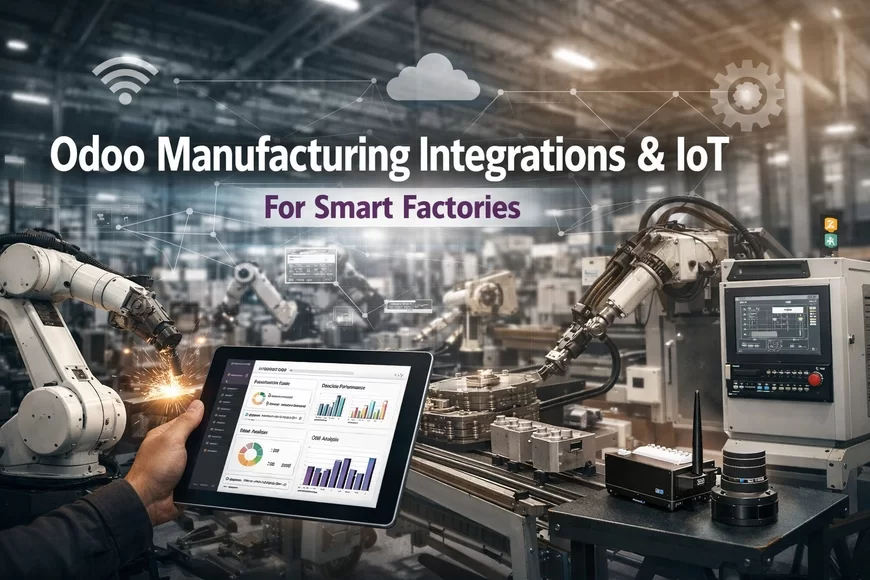
Odoo Manufacturing Integrations & IoT
Connect machines, devices, and systems so production decisions happen in real time
Manufacturing teams often work with two realities:
what the system reports and what the shop floor actually experiences.
When machines, scanners, weighing systems, or external software remain disconnected, production leaders operate with delayed truth.
Odoo Manufacturing Integrations and IoT close that gap. Machines, devices, and operational systems communicate with the ERP so production data becomes immediate, traceable, and reliable.
The goal is not technology for its own sake.
It is clarity at the exact moment decisions must be made.
Why Integrations and IoT Matter in Manufacturing
When production systems operate in isolation, teams rely on manual updates, delayed reporting, and memory-based coordination. This increases operational friction and weakens control.
By connecting machines and operational tools to Odoo, manufacturers gain:
- Real-time operational visibility across production lines
- Automated data capture reducing manual entry errors
- Immediate exception alerts when machines stop or processes deviate
- Accurate production reporting for management and finance
- Traceability confidence for audits and customer requirements
The psychological benefit is powerful: teams trust the data they see, which accelerates decisions and reduces hesitation.
Types of Integrations in Odoo Manufacturing
Manufacturing environments rely on multiple technologies. Odoo’s flexible architecture allows controlled integration across devices and systems that influence production.
Common integration areas include:
Shop-Floor Machines
Machine signals can trigger production updates, downtime recording, or work order progress. This provides real-time feedback on throughput and utilization.
Barcode and Scanning Systems
Barcode scanners connect inventory, production, and logistics workflows—ensuring materials, batches, and finished goods remain traceable.
Industrial IoT Sensors
Sensors monitoring temperature, vibration, pressure, or runtime can automatically feed operational data into Odoo dashboards.
Weighing and Measurement Systems
Production environments that rely on precise weight or measurement data can integrate scales directly with work orders and quality checkpoints.
External Business Systems
Integration may also connect Odoo with:
- MES platforms
- Quality management systems
- logistics and warehouse tools
- supplier portals
- customer systems for order synchronization
Each integration reduces manual dependency and strengthens operational transparency.
IoT Applications Across Manufacturing Operations
Connected systems create a production environment where information flows automatically instead of being manually transferred.
Examples include:
Machine Monitoring
Track uptime, downtime, and cycle counts to identify performance gaps early.
Automated Production Updates
Machines can update work order progress automatically as operations complete.
Quality Monitoring
Sensors detect deviations in temperature or pressure that could impact product quality.
Inventory Movement Tracking
Barcode scanning ensures materials move through production with full traceability.
Maintenance Signals
IoT data can trigger preventive maintenance activities before failures disrupt production.
These capabilities shift manufacturing from reactive control to proactive operational management.
Benefits for Manufacturing Leaders
Integrations and IoT create a measurable advantage across operational layers:
- Higher production transparency
- Improved equipment reliability
- Faster decision cycles
- Reduced data entry errors
- Stronger compliance and traceability
For plant managers and executives, the most valuable outcome is simple:
the system reflects reality with minimal delay.
Integration Approach
Successful integrations require structure and governance to avoid complexity or instability.
A typical implementation approach includes:
1. Discovery
Identify machines, devices, and systems that influence operational data.
2. Integration Design
Define data flow, communication protocols, and security controls.
3. Development and Configuration
Build secure connectors using Odoo’s integration framework.
4. Testing and Validation
Confirm data accuracy under real production scenarios.
5. Deployment and Monitoring
Activate integrations gradually while monitoring performance.
This approach ensures integrations enhance the ERP rather than complicate it.
Typical Manufacturing Integration Use Cases
Manufacturers adopt integrations and IoT when operations require greater precision and automation.
Common use cases include:
- Multi-line factories requiring machine-level production monitoring
- Plants with strict traceability requirements
- Automated production environments with minimal manual reporting
- Industries requiring measurement-based quality validation
- Facilities aiming to reduce manual data capture
In each case, the objective remains consistent: remove uncertainty from operations.
CTA - Odoo Manufacturing Integrations & IoT
When machines speak directly to your ERP, decisions become faster and more confident.
- Request a consultation to evaluate integration opportunities
- Identify machines and systems that can improve operational visibility
- Design a controlled integration strategy for long-term stability
- Book a demo: Contact
FAQs-Odoo Manufacturing Integrations & IoT
Q1: What is IoT integration in Odoo Manufacturing?
It connects machines, sensors, and operational devices to the ERP so production data updates automatically.
Q2: Can Odoo integrate with barcode scanners and industrial devices?
Yes. Barcode systems, weighing scales, and various shop-floor devices can connect to production and inventory workflows.
Q3: Do integrations require replacing existing machines?
No. Most integrations connect with existing equipment through standard communication protocols.
Q4: Is IoT useful for preventive maintenance?
Yes. Sensor data can help identify patterns and trigger maintenance activities before breakdowns occur.
Q5: How complex are manufacturing integrations?
Complexity depends on equipment type, protocols, and data requirements. A discovery phase typically defines scope and feasibility.