Odoo Manufacturing ERP Timeline in UAE
Plan your Odoo Manufacturing ERP Timeline with confidence. Understand project phases, rollout strategy, and implementation factors for UAE factories.
 RIbsadmin
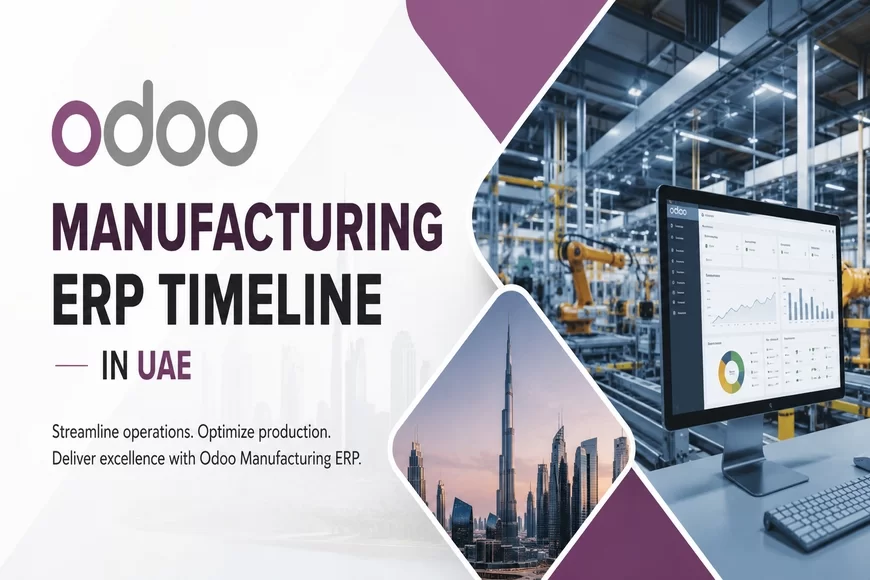
Odoo Manufacturing ERP Implementation Timeline in UAE
A realistic roadmap that balances speed, adoption, and operational stability
Most ERP projects do not fail because of technology. They struggle when timelines are built on assumptions rather than operational realities. A successful Odoo Manufacturing ERP implementation timeline should create confidence, reduce uncertainty, and allow teams to adopt new processes without disrupting production.
For manufacturers in Dubai, Abu Dhabi, and Sharjah, the objective is not the fastest go-live. The objective is achieving a stable go-live with measurable business value.
What Influences an ERP Timeline?
The clearer the scope, the greater the predictability
Implementation duration depends on several factors:
- Manufacturing complexity: production models, routings, quality controls, and traceability requirements.
- Number of facilities: single-site versus multi-site operations.
- Data readiness: master data quality, BOM accuracy, and inventory records.
- Integrations: barcode systems, third-party applications, and automation requirements.
- User adoption: training, testing, and process alignment.
The strongest timelines are built on realistic planning rather than optimistic assumptions.
Typical Odoo Manufacturing ERP Project Phases
Phase 1: Discovery & Blueprint
- Process mapping
- KPI identification
- Fit-gap assessment
- Future-state workflow design
Phase 2: Configuration & Validation
- Module configuration
- Role and approval setup
- Reporting structure
- Initial system validation
Phase 3: Data Migration
- Data cleansing
- Mapping and import preparation
- Reconciliation and verification
Phase 4: Testing & Training
- User Acceptance Testing (UAT)
- Process validation
- Role-based training sessions
Phase 5: Go-Live & Stabilization
- Controlled deployment
- Hypercare support
- User adoption monitoring
How Manufacturers Reduce Timeline Risk
Projects generally move faster when:
- BOMs and master data are maintained accurately.
- Decision-makers are available during workshops.
- Scope is prioritized into essential and future phases.
- Testing is treated as a business activity, not an IT task.
- Process ownership is clearly defined.
A structured approach often prevents delays more effectively than additional resources.
Timeline Mindset: Progress Over Pressure
Manufacturers often focus on "How quickly can we go live?"
A better question is:
"How quickly can we achieve stable operational control?"
A controlled rollout helps reduce rework, protects user confidence, and improves long-term ERP adoption.
Common Manufacturing Rollout Approaches
- Single-site deployment: suitable for focused operational transformation.
- Phased rollout: deploy core processes first, then expand capabilities.
- Multi-site expansion: standardize processes before wider deployment.
- Pilot-first approach: validate workflows before broader adoption.
The most effective approach depends on operational complexity, business priorities, and available resources.
Why RIBS Technologies
RIBS Technologies helps startups implement Odoo using a structured and practical approach focused on operational clarity, user adoption, and sustainable growth. ERP success depends on disciplined execution, not just software configuration.
Core Odoo Manufacturing Services
Choose the service layer that strengthens operational control first
- Odoo Consulting: Define workflows, controls, KPIs, and rollout priorities: Odoo Software Consulting Services
- Odoo Implementation: Configure modules, roles, approvals, and reporting structure: Odoo Apps Implementation Services
- Odoo Customization: Extend features without destabilising the system: Odoo Application Customization Services
- Odoo Integration: Connect data flows across business systems: Odoo Application Integration Services
- Workflow Automation: Reduce delays with controlled automation: Odoo Apps Workflow Automation Services
- Analytics and Reporting: Build KPI reporting that drives action: Odoo Apps Analytics and Reporting Services
- Support and Maintenance: Protect uptime, ad option, and controlled improvements: Odoo Apps Support and Maintenance Services
CTA - Odoo Manufacturing ERP Timeline
Build a timeline based on reality—not assumptions
- Book a demo: Contact RIBS Technologies
- We are the certified: Odoo ERP Partner
- To know more: About RIBS
- Customers who got benefits from us: Clients
FAQs - Odoo Manufacturing ERP Timeline
Q1: How long does Odoo Manufacturing ERP implementation usually take?
A: Duration varies based on scope, manufacturing complexity, integrations, and data readiness. A discovery phase helps establish a realistic timeline.
Q2: What phase takes the most time in ERP projects?
A: Data preparation, process validation, and user testing often have the greatest impact on project duration.
Q3: Can implementation be done in phases?
A: Yes. Many manufacturers deploy core functions first and expand capabilities in planned stages.
Q4: Does training affect implementation timelines?
A: Yes. User adoption and testing are important for achieving a stable and sustainable go-live.
Q5: How can manufacturers reduce project delays?
A: Clear scope definition, accurate data, active stakeholder participation, and structured testing help reduce timeline risks.