Common Mistakes to Avoid During Odoo Implementation
Avoid costly failures with Common Mistakes to Avoid During Odoo Implementation. Learn the risks, prevent errors, and ensure a clean, controlled Odoo rollout in the UAE.
 RIbsadmin
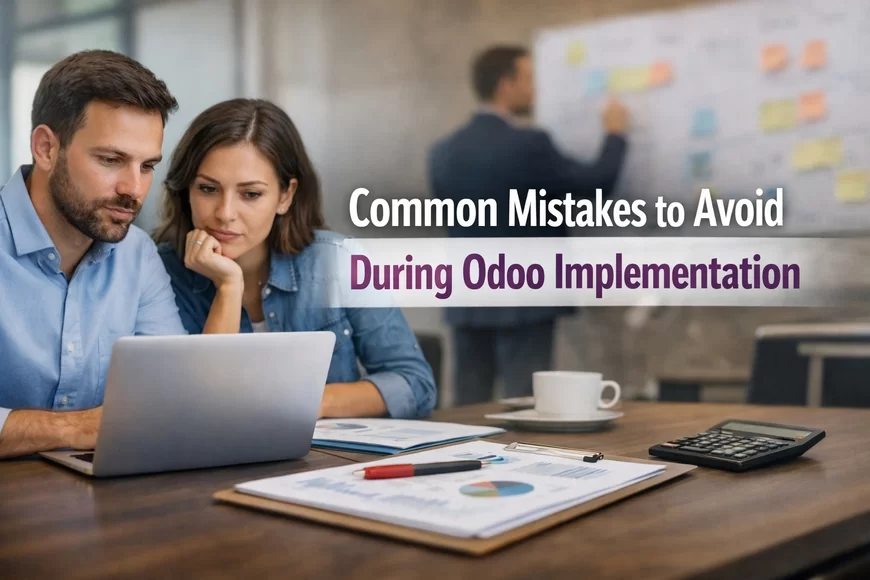
Common Mistakes to Avoid During Odoo Implementation
Most Odoo failures don’t happen at go-live… they happen months before.
They start quietly—unclear scope, rushed decisions, weak data, untested processes, and lack of ownership. Avoiding these pitfalls is the fastest way to protect your ROI, reduce rework, and achieve a clean, predictable, and controlled Odoo implementation.
This page helps you avoid the traps that most companies discover too late.
Why Odoo Projects Fail (and How to Protect Yours)
Odoo is powerful—but only if it’s implemented with clarity, control, and discipline.
Companies struggle not because Odoo is complex, but because key decisions are made too fast, too informally, or too late.
Top mindset shifts that reduce implementation risk:
- Define first, configure later → clarity removes chaos
- Decide ownership early → shared responsibility is no responsibility
- Fix data before migration → clean data = clean decisions
- Document every process → memory is not a system
- Push for adoption, not exploration → tools only matter if people use them
Common Mistakes to Avoid During Odoo Implementation
1. Starting Without a Clear Scope
Unclear boundaries create scope creep, cost surprises, and delayed timelines.
Clarity protects your budget and timeline.
2. Underestimating Data Migration
Poor master data = weak reporting, errors, and user frustration.
Data discipline must start months before configuration.
3. Skipping Process Documentation
If workflows are not defined, the system will reflect chaos.
Document your “future-state”—don’t recreate old problems.
4. Excessive Customization
Customizing too early increases cost, risks, and future instability.
Adopt standard Odoo first. Customize only when value is proven.
5. Weak Change Management
Users resist change when they don’t understand the “why.”
Adoption drives success—not features.
6. Not Testing Real Scenarios
UAT must use real cases, not demo examples.
If it isn’t tested, it will break at go-live.
7. No Internal Ownership
ERP cannot be vendor-driven alone.
A project champion inside the company is essential.
High-Intent CTA (UAE)
Protect your investment. Avoid the mistakes that cost companies months of rework.
- Request a procurement-focused demo: Book a Demo
- We are the certified: Odoo ERP Partner
- To know more: About RIBS
- Customers who got benified by us: Clients
How RIBS Ensures You Avoid These Mistakes
RIBS follows a risk-controlled, ISO-aligned implementation method designed to protect continuity and reduce ambiguity.
Our approach:
- Structured discovery + fit-gap
- Governed configuration
- Disciplined data migration
- Role-based UAT
- Hypercare with adoption reinforcement
This ensures predictability, clarity, and implementation confidence.
CTA Block (Dubai, Abu Dhabi, Sharjah)
If stability matters, avoid the mistakes that break most Odoo projects.
- Book a tailored demo: Book a Demo
- Request a project assessment
- Plan a clean, governed rollout
FAQs
Q1: What causes most Odoo implementations to fail?
A: Weak scoping, unclear ownership, poor data quality, and untested processes cause most failures—not the software itself.
Q2: How much customization is safe during implementation?
A: Start with standard Odoo. Customize only after validating real use cases and measurable value.
Q3: Why is data migration critical?
A: Bad data leads to operational errors, reporting issues, and user frustration after go-live.
Q4: Do we need a project manager internally?
A: Yes. Internal ownership ensures faster decisions, smooth coordination, and better adoption.
Q5: When should UAT be done?
A: After configuration is stable—using real scenarios, real data, and real workflows.