Step-by-Step Guide to Odoo Implementation for SMEs in the UAE
Achieve clarity and control with this Odoo Implementation for SMEs step-by-step guide. Learn how SMEs in UAE deploy Odoo with structure, discipline, and measurable results.
 RIbsadmin
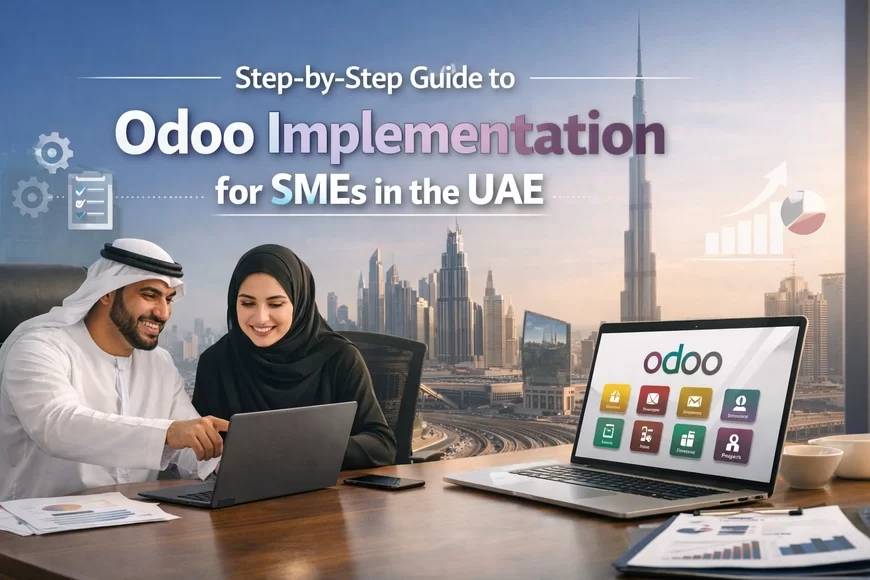
Step-by-Step Guide to Implementing Odoo for SMEs
(Odoo Implementation for Small & Medium Enterprises – Practical Rollout Framework)
Implement Odoo with Control, Clarity, and Zero Overwhelm
SMEs do not fail because they lack talent—they fail because processes depend on memory, manual follow-ups, and disconnected tools. A structured Odoo implementation removes ambiguity, builds discipline, and gives leaders the confidence to scale without chaos.
This guide is designed for SMEs in Dubai, Abu Dhabi, Sharjah, and across the UAE who want a clear roadmap—simple, risk-controlled, and aligned with business realities.
Why SMEs Succeed with a Structured Odoo Implementation
Clarity first. Configuration second. Expansion last.
Without structure, ERP becomes noise. With structure, it becomes leverage.
Top benefits of a controlled implementation:
- Decision confidence: Real-time visibility replaces guesswork.
- Process discipline: Workflows reduce errors and delays.
- Data accuracy: Clean master data prevents operational breakdowns.
- Scalable structure: Add modules without disrupting performance.
- Governance readiness: Role-based access improves accountability.
Explore complete solutions:
Odoo ERP Solutions •
Odoo All Apps ERP Software
Step-by-Step Implementation Framework for SMEs
1) Discovery & Business Understanding
A short, high-impact phase to confirm business goals, bottlenecks, and required processes.
- Identify essential workflows
- Map current challenges
- Confirm quick wins and long-term priorities
Recommended: Odoo Software Consulting Services
2) Scope Confirmation & Fit-Gap
Decide exactly what Odoo will do on Day 1—and what comes in later phases.
- Confirm required modules
- Identify gaps and solutions
- Reduce scope creep and surprises
Internal link: Odoo Apps Implementation Services
3) Solution Design & Workflow Structuring
Translate objectives into practical workflows that your teams can actually follow.
- Process mapping
- Approval structures
- Role-based access design
This ensures every module supports business clarity—not complexity.
4) Configuration & Controlled Customization
Build only what reinforces discipline. Avoid unnecessary customizations.
- Setup modules
- Configure approvals
- Build essential custom fields, printouts, or automations
Explore: Odoo Application Customization Services
5) Data Migration & Validation
Clean, structured data prevents ERP breakdowns.
- Item master cleaning
- Chart of accounts alignment
- Supplier & customer data accuracy
- Opening balances validation
Quality input = quality output.
6) UAT (User Acceptance Testing) & Training
Teams learn the execution flow, not screens.
- Test real scenarios
- Validate workflows
- Train based on roles and responsibilities
This builds habit and adoption, the psychological trigger behind ERP success.
7) Go-Live & Hypercare
Fast response + guided correction = stable adoption.
- Issue resolution
- Performance tuning
- User reinforcement sessions
Support options: Odoo Apps Support & Maintenance Services
8) Continuous Improvement & Expansion
After stabilization, add new modules only when performance metrics show readiness.
- Automations
- Dashboards
- Additional modules (HR, CRM, Projects, etc.)
- Branch or department rollouts
Learn more: About RIBS Technologies and Clients
CTA - Step-by-Step Guide to Implementing Odoo for SMEs
Transform your SME into a controlled, scalable, and efficient business system.
- Request a guided demo: Request Demo
- We are the certified: Odoo ERP Partner
- To know more: About RIBS
- Customers who got benified by us: Clients
FAQs-Step-by-Step Guide to Implementing Odoo for SMEs
Q1: How long does Odoo implementation take for SMEs?
A: Most SME rollouts take 4–12 weeks depending on modules, data, and training readiness.
Q2: Can SMEs start with a small scope?
A: Yes—phased implementation is recommended to protect adoption and reduce risk.
Q3: What is the biggest factor in success?
A: Clean data and clear ownership. When roles are defined, adoption becomes natural.
Q4: Do SMEs need customization?
A: Only when it improves control and reduces confusion. Most SMEs start with core features.
Q5: How much training is required?
A: Role-based, scenario-driven training works best and reduces resistance.