Odoo Integration Services for Manufacturing Sector in UAE
Deploy Odoo Integration Services to connect inventory, finance, production, and barcode workflows for faster, more reliable manufacturing operations.
 RIbsadmin
Odoo Integration Services for Manufacturing in UAE
Connect systems, remove data silos, and create operational trust
Manufacturing delays rarely start on the shop floor. They often begin when systems do not communicate—inventory differs between departments, approvals move slowly, production data arrives late, and decisions are made using incomplete information. Odoo Integration Services help manufacturers connect ERP workflows with barcode systems, finance, procurement, production, and external applications—so operations become faster, cleaner, and more reliable.
For manufacturers in Dubai, Abu Dhabi, and Sharjah, integration is not just about connectivity—it is about decision confidence.
What Odoo Integration Delivers
One connected workflow instead of disconnected updates
A connected ERP environment reduces manual intervention and improves operational consistency. Teams spend less time correcting mismatched data and more time executing with clarity.
Business outcomes manufacturers target
- Real-time visibility: inventory, production, procurement, and finance stay aligned
- Faster execution: fewer delays caused by manual reconciliation and duplicate entry
- Better accountability: workflows, approvals, and updates become traceable
- Stronger reporting confidence: decisions rely on synchronized operational data
- Controlled scalability: integrations designed to support future growth without process instability
Explore the ERP foundation: Odoo ERP Solutions
High-Intent CTA (UAE)
Disconnected systems create hidden operational cost
- Request an integration assessment: identify workflow gaps and synchronization risks: Contact Us
- Book a tailored demo: review integration workflows aligned to your factory operations: Book a Demo
Common Manufacturing Integrations
Connect the systems that directly affect execution and reporting
- Barcode and warehouse systems: improve stock accuracy and traceability discipline
- Shop-floor terminals and tablets: capture live production updates and work order progress
- Finance and costing systems: align operational data with accounting visibility
- Procurement and supplier workflows: reduce delays caused by disconnected approvals
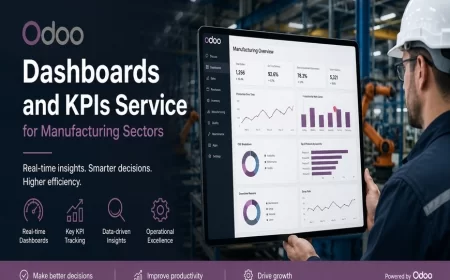
- Dashboards and reporting tools: create consistent KPI visibility across departments
Strengthen operational flow with:
Odoo Supply Chain Management Software
Odoo Finance Accounting Solutions
Integration Approach (Risk-Controlled)
Stability first—automation second
Successful integrations are designed around workflow accuracy, validation logic, and controlled data movement. RIBS follows a structured approach to reduce synchronization issues and protect operational continuity.
- Workflow assessment: identify process dependencies and data touchpoints
- Integration design: define validation rules, permissions, and exception handling
- Testing and reconciliation: confirm data accuracy before go-live
- Deployment and stabilization: monitor integration performance under live usage
- Optimization support: refine workflows as operational needs evolve
Related services:
Odoo Apps Implementation Services
Odoo Apps Workflow Automation Services
Manufacturing-Focused Integration Benefits
Reduce friction across the full operational chain
- Less manual entry: lower risk of duplicate or inconsistent data
- Faster approvals: connected workflows reduce follow-up dependency
- Improved traceability: synchronized records support audit readiness
- More reliable KPIs: cleaner operational data improves reporting trust
- Higher adoption confidence: teams rely on one connected process instead of multiple disconnected tools
Support and Integration Stability
Because manufacturing operations cannot afford unreliable data flow
Post-deployment support helps manufacturers monitor synchronization accuracy, maintain workflow consistency, and handle operational changes without disrupting execution.
Ongoing support:
Odoo Apps Support and Maintenance Services
Why RIBS Technologies
Because integration success depends on process understanding—not just technical setup
RIBS Technologies is an ISO 9001:2015-certified software development company delivering structured ERP and integration services for UAE businesses.
- Finance & accounting: invoicing discipline and reporting confidence with Odoo Finance Process Applications
- Sales operations: pipeline clarity and order consistency with Odoo Sales Applications
- Supply chain: procurement and inventory accuracy with Odoo Supply Chain Applications
- HR & governance: standardised workflows and approvals with Odoo Human Resources Applications
- Services & delivery: accountability for projects and services using Odoo Services Applications
- Productivity & approvals: enforce ownership with Odoo Productivity Applications
See implementation experience across industries:
Clients
CTA Block (Dubai, Abu Dhabi, Sharjah)
When systems connect properly, execution becomes predictable
- Book a demo: Request Demo
- We are the certified: Odoo ERP Partner
- To know more: About RIBS
- Customers who got benified by us: Clients
FAQs- Odoo Integration Services for Manufacturing in UAE
Q1: What is included in Odoo Integration Services for manufacturers?
A: Services typically include workflow analysis, integration design, validation logic, synchronization setup, testing, deployment, and stabilization support across ERP, inventory, finance, and operational systems.
Q2: Can Odoo integrate with barcode and warehouse systems?
A: Yes. Odoo can support barcode-driven inventory and warehouse workflows to improve stock visibility, traceability, and operational accuracy.
Q3: Why is integration important in manufacturing operations?
A: Connected systems reduce duplicate entry, improve reporting consistency, and help teams make faster decisions using synchronized operational data.
Q4: What affects the cost of Odoo integration projects?
A: Cost depends on the number of systems, workflow complexity, data mapping effort, validation requirements, reporting scope, and post-go-live support expectations.
Q5: Can integrations be implemented in phases?
A: Yes. Many manufacturers prefer phased integration rollouts to reduce operational risk and stabilize workflows step by step.