Odoo ERP for Food & Beverage Manufacturing Industries
Deploy Food Manufacturing ERP with Odoo to manage batches, expiry, inventory, costing, and quality control across UAE food factories.
 RIbsadmin
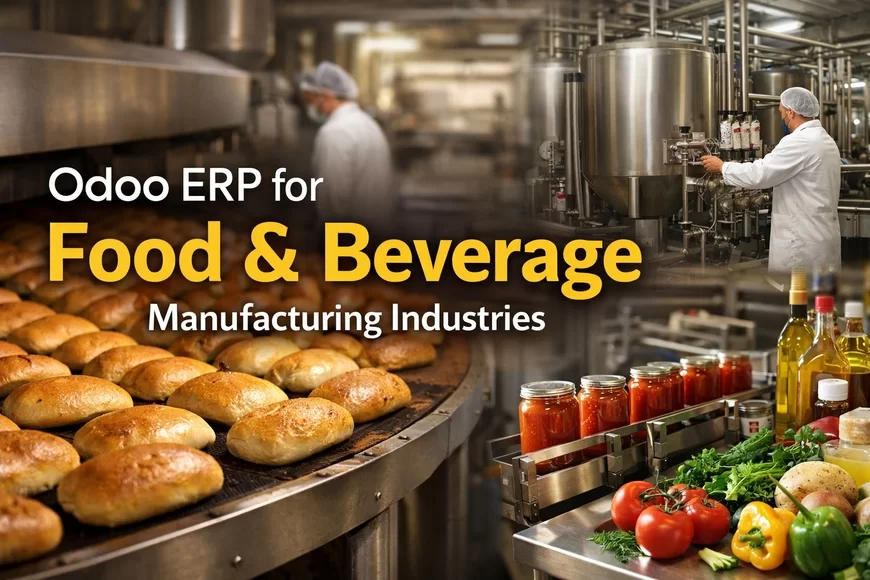
Odoo ERP for Food and Beverage Manufacturing in UAE
Protect quality, control margins, and deliver consistency at scale
Food and beverage manufacturers do not usually lose profit through one major failure. It often disappears through waste, expiry losses, batch errors, delayed production, stock inaccuracy, and inconsistent costing. Odoo ERP for Food and Beverage Manufacturing connects production, inventory, quality, procurement, maintenance, sales, and finance into one controlled system—so leaders gain visibility, teams gain discipline, and customers receive consistent output.
For manufacturers in Dubai, Abu Dhabi, and Sharjah, the priority is clear: turn operational pressure into controlled growth.
Why Food & Beverage Manufacturers Need ERP
Because consistency builds trust—and trust drives repeat demand
Food production depends on precision. Small gaps in traceability, planning, hygiene controls, or expiry management can quickly become expensive. Odoo helps standardize workflows so daily performance does not depend on memory or manual coordination.
High-Intent CTA (UAE)
Move from reactive firefighting to proactive control
- Book a tailored demo: Contact Us
- Explore platform capability: Odoo ERP Solutions
Why Odoo for Food & Beverage Manufacturing?
Because in food manufacturing, small mistakes become expensive fast.
Margins are often affected by waste, expiry losses, recipe inconsistency, stock errors, downtime, and delayed deliveries. Odoo ERP helps bring production, inventory, quality, procurement, and finance into one connected system—so operations become more controlled, measurable, and scalable.
Key Capabilities for Food & Beverage Plants
Designed for daily production pressure
- Recipe / BOM control: ingredient standards and version discipline
- Batch production: planned runs with material visibility
- Production scheduling: reduce bottlenecks and rush decisions
- Inventory control: lots, expiry dates, FIFO / FEFO handling
- Quality management: inspections, alerts, and corrective actions
- Maintenance planning: reduce downtime on critical equipment
- Reporting dashboards: waste, yield, output, and margin signals
Related systems: Odoo Supply Chain Management Software and Odoo Finance Accounting Solutions
Implementation Approach
RIBS follows a structured, adoption-focused approach designed to reduce rework and strengthen execution confidence:
- Discovery & blueprint: scope, workflows, KPIs, roles via Odoo Software Consulting Services
- Build & validation: configuration, access controls, reporting design via Odoo Apps Implementation Services
- Data migration discipline: mapping, reconciliation, controlled cutover via Odoo Apps Data Migration Services
- Workflow enforcement: approvals and escalations via Odoo Apps Workflow Automation Services
- Training & UAT: role-based enablement via Odoo Application Training Services
- Go-live stability: structured continuity via Odoo Apps Support and Maintenance
- Decision-ready dashboards: via Odoo Apps Analytics and Reporting Services
Services: Odoo Apps Implementation Services
Common Integrations
- Barcode scanners
- Label printing
- Weighing scale connectivity
- Approval workflows
- Management dashboards
Integration support: Odoo Application Integration Services
Support and Stability
Because production lines cannot wait for system issues
Reliable post-go-live support helps maintain trust, usage, and performance consistency.
Support: Odoo Apps Support and Maintenance Services
Why RIBS Technologies
Because structured execution creates measurable confidence
RIBS Technologies is an ISO 9001:2015-certified software development company with UAE presence, focused on ERP delivery that improves control, adoption, and operational clarity.
- Manufacturing-focused approach
- Governed customization
- Role-based training
- KPI-driven reporting
- Practical rollout methodology
Learn more: About RIBS Technologies
CTA Block
If quality and profit matter, control must come first
- Book a demo: Request Demo
- We are the certified: Odoo ERP Partner
- To know more: About RIBS
- Customers who got benified by us: Clients
FAQs - Odoo ERP for Food and Beverage Manufacturing
Q1: Can Odoo manage food batch production?
A: Yes. Odoo supports batch-based production planning, raw material tracking, and output recording.
Q2: Does Odoo support expiry date management?
A: Yes. Lot tracking and expiry controls help reduce waste and improve stock rotation discipline.
Q3: Can Odoo help with food quality checks?
A: Yes. Quality checkpoints, alerts, and records help maintain consistent standards.
Q4: Is Odoo suitable for multi-site food factories?
A: Yes. Odoo supports centralized reporting with controlled access across locations.
Q5: What impacts project cost?
A: Scope, users, modules, integrations, data migration, reporting, and rollout complexity.