Odoo Apps For Productivity Automation & Workflow Control In UAE
Control approvals, tasks, and alerts using Odoo Productivity Automation. Reduce delays, improve accountability, and streamline execution across UAE operations.
 RIbsadmin
Odoo Productivity & Automation for Manufacturing
Reduce delays. Remove dependency. Build execution discipline.
When approvals depend on follow-ups and tasks depend on memory, operations do not stop—they slow down silently. Missed approvals, delayed actions, and unclear ownership create hidden inefficiencies that compound over time. Odoo Productivity & Automation Apps convert everyday activities into structured workflows, approvals, alerts, and measurable actions—so execution becomes predictable, accountable, and fast.
For manufacturers in Dubai, Abu Dhabi, and Sharjah, the advantage is clear: less chasing, more control.
What Productivity & Automation Solves
Turn human dependency into system-driven execution
Most operational delays are not technical—they are behavioral. Tasks are forgotten, approvals are delayed, and escalation happens too late. Odoo embeds control directly into workflows so actions happen on time, every time.
What leaders gain
- Process visibility: know who is responsible, what is pending, and where delays occur
- Faster approvals: structured flows reduce waiting time and ambiguity
- Execution speed: automated triggers eliminate manual follow-ups
- Measurable discipline: every action becomes trackable and auditable
- Reduced dependency: systems drive execution, not individual effort
Explore the full ecosystem: Odoo ERP Solutions
High-Intent CTA (UAE)
Stop chasing work. Start controlling it.
- Request a demo: see workflow automation mapped to your operations: Book a Demo
- Request a consultation: identify delay points and automation opportunities: Contact Us
Why Odoo Productivity & Automation Matters in Manufacturing
Because time lost in small delays becomes large operational risk
In manufacturing, even small approval delays or missed updates can impact planning, production, procurement, and delivery timelines. Odoo strengthens execution by ensuring that nothing moves forward without control—and nothing gets stuck without visibility.
Typical outcomes
- Reduced approval delays: faster decision cycles across departments
- Improved accountability: clear ownership for every task and action
- Fewer missed actions: alerts and triggers reduce human error
- Higher operational rhythm: consistent execution without interruptions
Core Capabilities (Execution Control Layer)
Build discipline into daily operations
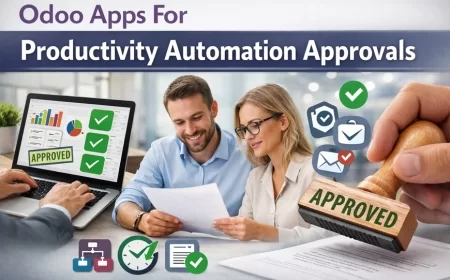
- Approval workflows: structured approvals for purchases, production, quality, and finance
- Automated alerts: reminders and escalations based on conditions and delays
- Task management: assign, track, and monitor responsibilities in real time
- Workflow automation: trigger actions automatically based on predefined rules
- Dashboards and tracking: visibility into pending, completed, and delayed activities
For workflow setup and integration:
Odoo Apps Workflow Automation Services
Manufacturing Use Cases
Where control removes friction immediately
- Procurement approvals: RFQs, POs, and vendor decisions move without delay
- Production coordination: tasks and updates align across planning and execution
- Quality escalation: issues trigger alerts and controlled resolution flows
- Maintenance actions: breakdowns and schedules trigger immediate responses
- Multi-department coordination: finance, operations, and supply chain stay aligned
Implementation Approach (Structured & Controlled)
Automation without chaos—designed for real operations
Automation must simplify operations, not complicate them. RIBS implements productivity tools with clear governance and phased rollout.
- Process mapping: identify delay points and approval gaps
- Workflow design: build controlled automation aligned to operations
- Configuration: roles, alerts, escalation logic, and tracking
- User enablement: ensure teams adopt workflows confidently
- Go-live support: stabilize and refine based on real usage
Implementation support:
Odoo Apps Implementation Services
Integration and Control
Automation works best when connected across systems
- Integrate with manufacturing, inventory, quality, and finance apps
- Enable cross-functional workflows with shared data
- Maintain consistency across approvals and reporting
Integration services:
Odoo Application Integration Services
Support and Stability
Because workflow failure means operational delay
Ongoing support ensures workflows remain relevant, optimized, and aligned with changing business needs.
Support services:
Odoo Apps Support and Maintenance Services
Why RIBS Technologies
Because execution discipline is designed—not assumed
RIBS Technologies is an ISO 9001:2015-certified software development company delivering structured ERP solutions focused on control, clarity, and adoption.
- Process-driven automation: aligned to real operational behavior
- Controlled workflows: designed to reduce risk and delays
- Role-based execution: clarity in ownership and accountability
- Actionable dashboards: insights that drive decisions
Learn more:
About RIBS Technologies
CTA Block (Dubai, Abu Dhabi, Sharjah)
If execution speed matters, automation must be controlled
- Book a demo: Request Demo
- We are the certified: Odoo ERP Partner
- To know more: About RIBS
- Customers who got benified by us: Clients
Core Odoo Service Lines
Choose the service layer that removes the most risk first
- Odoo Consulting: Define workflows, controls, KPIs, and rollout priorities: Odoo Software Consulting Services
- Odoo Implementation: Configure modules, roles, approvals, and reporting structure: Odoo Apps Implementation Services
- Odoo Customization: Extend features without destabilizing the system: Odoo Application Customization Services
- Odoo Integration: Connect data flows across business systems: Odoo Application Integration Services
- Workflow Automation: Reduce delays with controlled automation: Odoo Apps Workflow Automation Services
- Analytics and Reporting: Build KPI reporting that drives action: Odoo Apps Analytics and Reporting Services
- Support and Maintenance: Protect uptime, ad option, and controlled improvements: Odoo Apps Support and Maintenance Services
FAQs- Odoo Productivity & Automation for Manufacturing
Q1: What processes can be automated in Odoo for manufacturing?
A: Approvals, task assignments, alerts, procurement flows, quality escalations, and reporting triggers can be automated to reduce delays and improve execution control.
Q2: Does automation reduce human involvement completely?
A: No. Automation supports decision-making by structuring workflows and reducing manual effort, while keeping critical approvals and controls with responsible roles.
Q3: Can workflows be customized based on company processes?
A: Yes. Workflows, approval levels, alerts, and triggers can be configured to match operational requirements and governance structures.
Q4: What are the key benefits of workflow automation?
A: Faster approvals, fewer missed tasks, improved accountability, and better visibility into operations—leading to consistent execution.
Q5: Is training required for teams to use automation tools?
A: Yes. Basic role-based training ensures teams understand workflows and adopt them effectively in daily operations.