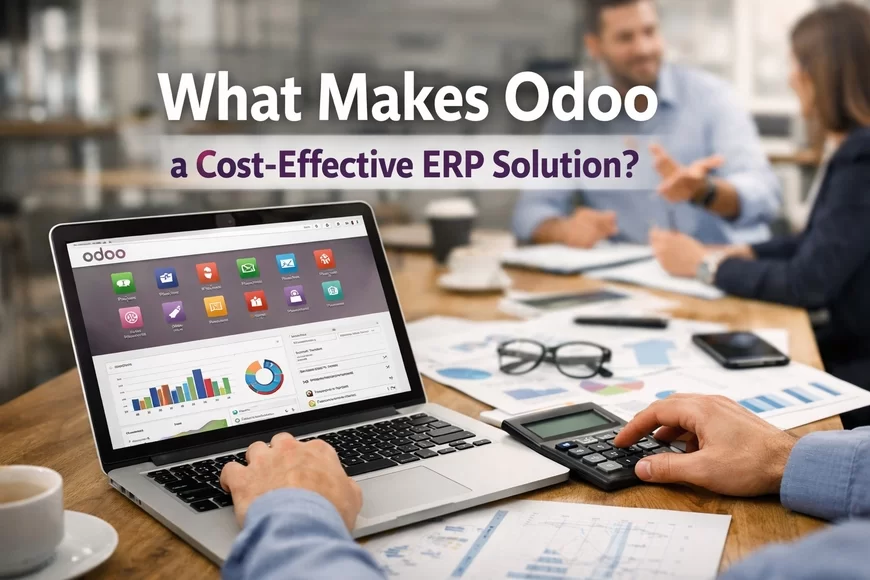
What Makes Odoo a Cost-Effective ERP Solution
Discover a Cost-Effective ERP Solution with Odoo. Reduce ERP costs, improve efficiency, and scale confidently across UAE businesses
 RIbsadmin
What Makes Odoo a Cost-Effective ERP Solution
Control cost without sacrificing capability or scalability
Many ERP systems do not fail because they lack features—they fail because cost grows faster than value. Licensing complexity, hidden integration expenses, and constant customization cycles quietly increase total ownership cost. Odoo ERP takes a different approach: one connected platform, modular adoption, and controlled implementation—so businesses gain financial clarity, operational control, and long-term scalability without unnecessary overhead.
For organizations in Dubai, Abu Dhabi, and Sharjah, the priority is clear: invest once, scale without friction, and protect margins at every stage.
Why Cost Efficiency in ERP Matters
Because small inefficiencies compound into large financial leaks
ERP is not just a technology decision—it is a long-term cost structure decision. Systems that require multiple vendors, heavy maintenance, or fragmented integrations slowly reduce ROI. Odoo improves cost efficiency by reducing duplication, dependency, and unpredictability.
What decision-makers gain
- Predictable cost structure: fewer surprises in licensing, upgrades, and integrations
- Reduced system fragmentation: one platform replaces multiple disconnected tools
- Lower operational waste: less manual work, fewer errors, reduced rework
- Scalable investment: pay for what you use, expand only when needed
- Controlled customization: avoid over-engineering that increases maintenance cost
Explore the full ecosystem: Odoo ERP Solutions
High-Intent CTA (UAE)
Reduce ERP cost without reducing control
- Request a cost-focused demo: aligned to your workflows and priorities: Book a Demo
- Request a consultation: identify hidden cost drivers and optimization opportunities:
- We are the certified: Odoo ERP Partner
Key Factors That Make Odoo Cost-Effective
Designed to reduce total cost of ownership—not just entry cost
- Modular architecture: start with essential apps, expand gradually without rebuilding systems
- Built-in integration: finance, sales, inventory, HR, and operations in one ecosystem—reducing third-party costs
- Faster implementation cycles: standardized workflows reduce long deployment timelines
- Simplified upgrades: consistent platform avoids costly version migration projects
- Reduced IT dependency: user-friendly interface lowers reliance on specialized technical resources
Where Cost Savings Actually Come From
Real savings happen in daily operations—not just licensing
- Finance automation: faster reconciliation, fewer manual corrections
- Inventory accuracy: reduced overstocking and stock-outs
- Time efficiency: less duplication across departments
- Quality control: fewer defects and rework cycles
- Maintenance discipline: fewer unexpected downtime costs
For supply and financial control:
Odoo Supply Chain Management Software
Odoo Finance Accounting Solutions
Best Fit Scenarios for Cost Efficiency
Where Odoo delivers maximum financial impact
- Growing businesses: need structure without heavy upfront investment
- Multi-department organizations: require shared data and controlled workflows
- Manufacturing and operations-driven companies: need cost visibility across production
- Companies replacing multiple systems: want consolidation and reduced overhead
Implementation Approach (Cost-Controlled Delivery)
Control cost early—avoid correction cost later
The biggest ERP expense is not implementation—it is misalignment. RIBS focuses on structured delivery to reduce rework, scope creep, and unnecessary customization.
- Discovery and blueprint: define scope, KPIs, and realistic expectations
- Controlled configuration: align workflows with business needs
- Data validation: prevent errors that lead to correction costs later
- Focused training: reduce dependency and increase adoption speed
- Stable go-live: minimize disruption and financial impact
- Phased expansion: invest only after measurable results
Implementation support:
Odoo Apps Implementation Services
Odoo Software Consulting Services
Integration Without Cost Explosion
Keep systems connected without multiplying expenses
- Use built-in Odoo modules instead of multiple third-party tools
- Integrate only where required—avoid unnecessary complexity
- Automate workflows to reduce recurring operational cost
Integration planning:
Odoo Application Integration Services
Support and Long-Term Cost Stability
Because uncontrolled support cost erodes ROI
Post-go-live stability ensures your ERP remains efficient, not expensive.
Ongoing support:
Odoo Apps Support and Maintenance Services
Why RIBS Technologies
Because cost efficiency comes from control—not shortcuts
RIBS Technologies is an ISO 9001:2015-certified software development company delivering ERP solutions with a focus on clarity, governance, and measurable outcomes.
- Process-first approach: reduce rework and inefficiencies
- Controlled implementation: avoid unnecessary customization cost
- Role-based enablement: faster adoption, lower dependency
- KPI-driven delivery: focus on measurable business impact
Learn more:
About RIBS Technologies
Clients
CTA Block (Dubai, Abu Dhabi, Sharjah)
If cost matters, control matters more
- Book a tailored demo: Request Demo
- Identify cost leakage: evaluate where ERP inefficiencies impact margins
- Scale with confidence: invest only when results are proven
FAQs
Q1: Why is Odoo considered cost-effective compared to traditional ERP systems?
A: Odoo reduces cost through a modular structure, built-in integrations, and simplified upgrades—lowering licensing, implementation, and long-term maintenance expenses.
Q2: Does Odoo reduce operational costs or just software costs?
A: Odoo primarily reduces operational costs by improving efficiency, reducing errors, and minimizing duplication across departments.
Q3: Can Odoo scale without significantly increasing cost?
A: Yes. Businesses can add modules gradually, ensuring cost increases only when business needs expand.
Q4: What factors influence the cost of Odoo implementation?
A: Key factors include number of users, modules, customization scope, integrations, data migration effort, and training requirements.
Q5: How can businesses control ERP costs during implementation?
A: A structured discovery phase, controlled customization, phased rollout, and proper training help prevent cost overruns.